I admit that I am something of an Austenite, and so I am excited to have the chance to teach using Pride and Prejudice. This novel is great to teach with because it is a classic in very formal English, but there are so many great adaptations of it that students are normally at least passingly familiar with it and therefore more confident as they begin to read.
To view my Prezi introduction to Pride and Prejudice, click here.
If you enjoy Pride and Prejudice, you may also enjoy Austen fan-fiction, such as Dancing with Mr. Darcy.
Tuesday, 21 January 2014

Wednesday, 15 January 2014
Introduction to Frankenstein by Mary Wollstonecraft Shelley
I previously posted links to presentations introducing my students to Extremely Loud and Incredibly Close and The Adventures of Sherlock Holmes. Today, I'm adding the next audiobook option: Shelley's Frankenstein.
Although most students have heard of Frankenstein, most think that Frankenstein is the lumbering, green monster, rather than the scientist. Indeed, Frankenstein and his monster are both commonly misrepresented and misunderstood characters. The actual novel is beautiful, provocative, and insightful. It tackles issues about human nature within the framework of an entertaining story. Although told at the time as a ghost or horror story, Frankenstein is now recognized as one of the first true science fiction novels. I love this novel, and I am excited to share it with some of my students this semester.
To view my Prezi presentation introducing Frankenstein to students, click here.
If you enjoy Frankenstein, you may also enjoy Out of the Silent Planet by C.S. Lewis.
 |
| (Image from Wikimedia) |
Tuesday, 14 January 2014
The Adventures of Sherlock Holmes
In my last post, I explained that my students are listening to audiobooks. The first choice was Extremely Loud and Incredibly Close by Jonathan Safran Foer. Their second choice is The Adventures of Sherlock Holmes by Sir Arthur Conan Doyle.
Although Doyle's writing is more formal and "old-fashioned," many of them are familiar with the characters from modern adaptations. The reason that there are still so many adaptations is that the original books and stories are incredibly entertaining. The storylines are full of twists and turns, and the characters are unforgettable. If they can get past the initial resistance to the language and style, they will discover how exciting Sherlock Holmes really is.
Click here for my Prezi on Sherlock Holmes. This presentation gives a brief introduction to Doyle and his most famous character.
If you enjoy Sherlock Holmes, you may also enjoy the novel Remarkable Creatures by Tracy Chevalier.
 |
| Sir Arthur Conan Doyle at work. |
An Introduction to Extremely Loud and Incredibly Close
In my introductory English classes this year, I am requiring my students to listen to audiobooks. This is an ongoing assignment that will help to develop a lot of skills. I won't go into all of the research and pedagogy now, but I did want to share one of the resources I created.
This semester, there are four book choices; the most contemporary book option is Extremely Loud and Incredibly Close by Jonathan Safran Foer. According to Foer, this book is about grief and continuing with life after loss. The basic story line combines two tales: a nine-year-old in New York who is trying to cope after his dad dies in the 9/11 attacks, and his grandfather, who survived the bombings in Germany during WWII. It is, at times, both realistic and absurd, funny and heart-wrenching, awkward and beautifully written.
To view my Prezi presentation on Extremely Loud and Incredibly Close, click on the link:
http://prezi.com/jquxa0ursml_/?utm_campaign=share&utm_medium=copy&rc=ex0share. It ioffers a brief introduction to the book.
If you enjoy Extremely Loud and Incredibly Close, you may also like The Book Thief, by Markus Zusak.
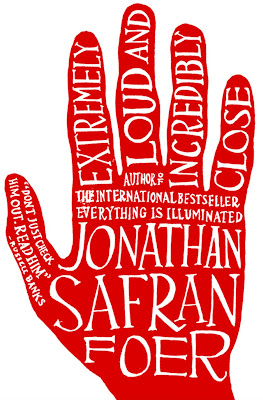
This semester, there are four book choices; the most contemporary book option is Extremely Loud and Incredibly Close by Jonathan Safran Foer. According to Foer, this book is about grief and continuing with life after loss. The basic story line combines two tales: a nine-year-old in New York who is trying to cope after his dad dies in the 9/11 attacks, and his grandfather, who survived the bombings in Germany during WWII. It is, at times, both realistic and absurd, funny and heart-wrenching, awkward and beautifully written.
To view my Prezi presentation on Extremely Loud and Incredibly Close, click on the link:
http://prezi.com/jquxa0ursml_/?utm_campaign=share&utm_medium=copy&rc=ex0share. It ioffers a brief introduction to the book.
If you enjoy Extremely Loud and Incredibly Close, you may also like The Book Thief, by Markus Zusak.

Saturday, 2 February 2013
"Mr. Darcy Takes a Wife" by Linda Berdoll

Maybe it's because my husband bears an uncanny resemblance to him, but I do enjoy a good portrayal of Mr. Darcy. (Or perhaps that's why my husband resembles him, only ---sadly---lacking the sizable estate.) Some portrayals of Mr. Darcy try to simply embody his presence in Pride and Prejudice (both the Colin Firth and Keira Knightley film adaptations of the book fall in this category). Others, like the Bridget Jones movies, take some liberties in character, time period, or other details. Linda Berdoll's Austenite novel, Mr. Darcy Takes a Wife, attempts to just continue Austen's original novel, but actually becomes an almost completely separate entity.
Yes, the novel begins with the newlywed Darcy couple, and most of the characters are from Pride and Prejudice. The problem is that the characters, particularly Mr. Darcy, are not the same characters. Yes, the are superficially the same, but it just wasn't convincing as a continuation.
Even after I tried to think of it as a separate historical novel that happened to share some names with Austen's fiction, there were still some things that bothered me. The word "niggardly" is used, for example. Although it could probably be considered historical in context, it was completely unnecessary, and not a word frequently (if ever) used by Austen herself.
If you are just after historical fiction, read some of Tracey Chevalier or Philippa Gregory's books instead.
If you want to enjoy some Mr. Darcy, and I can't say I blame you, try checking out this list of Austenite fiction, or read the original. I have yet to take as great of pleasure in an Austen adaptation as in Austen's actual words (no matter how much I dearly love some Austen-based books and movies).
To find out more about Mr. Darcy Takes a Wife, click here.
Thursday, 3 January 2013
"The Easy Nature Guide: Easy Wild Food Guide" by Neil Fletcher
 |
| Spring 2012 in the Great Smoky Mountain National Park copyright Keri Withington |
This book is divided into sections by season, and is also searchable by food type and location. It includes pictures and descriptions. Many wild food guides or scavenging guides contain this information, but this one also includes other useful tips and preparation ideas. For some of the items, like fungi, I would still recommend checking with an experienced person before eating. However, this will help you start enjoying wild food.
For my book review of Fletcher's Easy Wild Food Guide, click here.
Saturday, 15 September 2012
"Blood Red, Snow White" by Marcus Sedgwick
Some novels give you exactly what you expect (like Kelley Armstrong's books), and there's something to be said for consistency. Some books disappoint you (for me, "Eat, Pray, Love"). Other books are so utterly surprising that they take your breath away. Whatever expectations you had shatter, and you are completely spellbound in the story.
"Blood Red Snow White," by Marcus Sedgwick, is one of these rare books. It was charming, entrancing, and powerful. It weaved together Russian history, fairy tales, and beautiful writing in such a way that I was completely engrossed by the book and disappointed when it ended (only because it meant that I had to stop reading). I wish that I had written this book, but--as I didn't--I am so glad that I read it.
To read my full review of Sedgwick's "Blood Red, Snow White," click here.
Monday, 10 September 2012
"A Slice of Organic Life" edited by Shererazade Goldsmith
 |
| Cades Cove, Great Smoky Mountains National Park August 2012, photo by me (Keri Withington) |
Given this captivation with organic living, I was immediately drawn to the attractive coffee table book "A Slice of Organic Life." It is beautifully presented, and provides a great sampler on organic life. Whether it is a lifestyle that already interests you or something that is new and you're mildly curious, this book will have some information for you. It is very accessible no matter what your situation is. I would have this book out on my coffee table (if I didn't have a toddler and could keep a nice coffee table with books), but even if not it's definitely worth flipping through.
To find out more about A Slice of Organic Life, please click here.
Monday, 20 August 2012
"The Lost Symbol" by Dan Brown
Although I'm a voracious reader, I don't always have a huge amount of interest for extremely popular books (think Michael Crichton, etc.). Sometimes I read them, though, just to see what all the hype is about and to be able to discuss them with others. I did this with "The Da Vinci Code" when it was the huge book of the year, and I read Dan Brown's most recent book, "The Lost Symbol", as well.
In true Dan Brown fashion, "The Lost Symbol" features adventures around a well=known world city involving a secret group and lots of symbols/clues hiding in plain site. It had some entertainment value, but--to me--it was an unremarkable book. The most interesting part for me was the role of freemasonry in American history (some of what is told is true; some is fictional). It was a topic that I would be interested in reading a non-fiction book about.
To find out if "The Lost Symbol" by Dan Brown is an accurate depiction of freemasonry, click here. Also "The Lost Symbol" brought freemasonry into the spotlight. Do you think it revealed too much about this traditionally secretive group? Click here to read some of the debate. (Feel free to leave a comment and let us know what you think as well.)
Thursday, 9 August 2012
"Midnight Never Come" by Marie Brennan
I recently took the kids to the library. It was a branch that I had never been to before, but that they have often visited with daddy. As soon as we walked through the door, Miriam (my six-year-old) grabbed my hand and said, "Come on, mum, I'll show you where the good books are." She promptly led me to an aisle that had the fantasy section on one side and the non-fiction on the other side. She was right; she did lead me to some good books (including "The New Feminist Agenda", which I checked out and will write about soon).
She's six, so she suggested that I read a book about fairies or dragons (and pointed out several suggestions).
Marie Brennan's "Midnight Never Come" is a book about fairies, but not anything like my daughter imagined. These fairies (faeries) are incredibly political and live in Elizabethan England. Their court is just as vibrant and dangerous as its human counterpart, and the two are often closer than either group would want to admit. This is not your children's fairy story...but it's also not everything I could have wished for in a fairy story. For a story about fairies, it was lacking magic, not in subject, but style.
For my full review of "Midnight Never Come", click here.
Wednesday, 8 August 2012
"I Sing the Body Electric" by Ray Bradbury
What a title!
Bradbury gave this collection of short stories a bold title reminiscent of Walt Whitman's confident and beautiful poems. Unfortunately, for me, the book didn't live up to its title. I Love Ray Bradbury, I truly do, but this was the book of his that I've enjoyed the least (I haven't read them all yet, but I'm working on it.)
It sounds like it would be fantastic (there's even a story with a robot Abraham Lincoln for goodness sake) but it just seemed more contrived to me than his other writing.
I'm glad that I read it, but it wouldn't be the Bradbury book I'd recommend. Instead start with "The Martian Chronicles", "Fahrenheit 451", or even "Farewell Summer".
Wednesday, 1 August 2012
"Goddess of the Rose" by P.C. Cast

We all know the story of "Beauty and the Beast". It has been adapted into children's movies, inspired art work, and helped to shape the romantic ideas of multiple generations. Compared to the wimpy princesses traditionally featured in fairy tales, Belle is always portrayed as smart and strong willed. She's a heroine I find far easier to relate to (and that I'd rather my daughters emulate as well). Even the Beast is a fascinating character (if far more interesting as the Beast than the prince...I can remember as a child how we quickly discarded the transformed prince doll and played exclusively with Belle and the Beast).
In "Goddess of the Rose", P.C. Cast combines the "Beauty and the Beast" fairy tale with other myths (notably the Minotaur) and a modern twist. The rose takes on even more importance than you're used to, and becomes a powerful symbol for her rather than just a token for him. It is a symbolic, romantic novel that will keep you entertained and perhaps longing to meet a Beast of your own (and start a rose garden).
To read my longer review of "Goddess of the Rose", click here.
To find out more about "Goddess of the Rose" and P.C. Cast's whole Goddess series, visit her official website.
Friday, 27 July 2012
Fictitious Dishes by Dinah Fried

Books are so much more than a stack of papers--or, these days, a digital information file. They can entertain, inspire, and educate us. A book can change the way that we think and view the world--and ourselves. There are books that capture moments in time or times of your life, that show society at large or the inner workings of the individual psyche. Books stay with you and become a part of you.
Because books can influence all aspects of our lives, I love when it is obvious how literary references seep into everyday life or unexpected places....like a diner table.
Artist Dinah Fried has frequently combined her passions for photography and literature, and I love her project Fictitious Dishes. She conceptualizes meals from classic novels, and then creates and photographs them. The diner dish shown above, for example, is inspired by J.D. Salinger's classic The Catcher in the Rye. I love both the simplicity of the project and the intricacy of staying true to the visions of both the author and the readers.
I always teach my students that you can "read" things other than books and that they should use their critical thinking skills in all aspects of their lives. These photos are well worth "reading" (but will only be fully appreciated if you have read the novels that inspired them).
To find out more about Dinah Fried and her artwork, visit her website.
Wednesday, 11 July 2012
Remembering Ray Bradbury
I meant to post the day that Ray Bradbury died. As soon as he heard, my husband called me at work to make sure that my sister and I were ok. (We work together, and also she loved Ray Bradbury more than anyone else I've ever met. In my social circles that is saying a lot. She is currently working on not just one but three Bradbury inspired quilts.)
When he died, I had two of his books siting on my bookshelf and was concurrently reading them. (My kids kept pulling them off the shelf, so I would pick up whichever short story collection I could find and keep going with it.)
Bradbury was the embodiment of an era. I'm sorry that I never had the chance to meet or even correspond with him. The writing that he left behind continues to help shape my outlook on the world. He left a legacy of creativity, nostalgia, and social critique that will continue to be not only relevant but necessary to society.
I'm looking forward to when my kids are old enough for me to give them their first paperback copy of a Bradbury.
Rest in peace Ray.

Sunday, 8 July 2012
"Lady Susan" by Jane Austen
I may not be in Austen country anymore, but the obsession with Jane Austen's writing remains. Having read her major novels, I have moved on to her more obscure literary offerings.
"Lady Susan" is an epistolary novel, meaning that it is written as a series of letters. It is not the best of Austen's writing. The characters are not as easy to identify with as her others. There's no Mr. Darcy to catch your fancy, and in fact you're left feeling rather blaise about all the characters. The social structure is not as subtly nuanced as in "Sense and Sensibility" or "Emma". it is less mature in handling.
And yet.... There is something captivating about it. I'm not sure what it is that makes you want to keep reading, but you do want to keep reading. It is part of Austen's development as a writer, and shades of this story show up in her better known works.
[I'm afraid that not only can I not take credit for the picture, I don't even know who to give the credit to. I borrowed it from a friend's Facebook post.]
Monday, 6 February 2012
Brian Clegg
This morning I received this comment on this blog of mine:
"Thanks for your lovely comments - could I be cheeky and point out that there's more on my books at www.brianclegg.net - I'm looking forward to more 2012 entries on your blog (I agree about Bradbury's Something Wicked btw, excellently atmospheric)."
Thank you to the fantastic author Brian Clegg for noticing my post! He can be cheeky any time he likes and I highly recommend that you all check out his actual website and buy his books!
If I could be cheeky, I would love it if Mr. Clegg ever wanted to send me another one of his books to review.
Sunday, 5 February 2012
"Light Years" by Brian Clegg
I love books that are both educational and entertaining in ways that you never expected. "Light Years" is one of those books. It doesn't just look at one person or event or story. Instead, it takes the history of man's study of and relationship with light. There's a lot of stories, philosophy, and history. The book is not quite a novel, not quite a history book, not quite a textbook. It's something unique, and it was fascinating to read.
To read my full review of "Light Years" by Brian Clegg, click here.
If you've noticed that "Light Years" is the firs book I've posted about it awhile, there's a reason why. My blog might be Keri's Bookshelf, but at the moment I don't have a bookshelf. We moved. Not just a down the road into a bigger house move, but a major, across the world, busy applying for a visa type move. This involved majorly downsizing. It felt like amputating a limb, but we managed to get rid of at least half of our books. Some we sold; some we gave away. Even so, we still have more boxes labelled "books" than anything else. We got rid of all of our bedding, towels, and electronics (including my computer, which has also made blogging more difficult). We kept stacks of boxes full of books.
Right now most of my books are still stacked in boxes in storage waiting to be shipped to us. Life is hectic. I don't even have a card at my new library yet.
On the other hand, I discovered ibooks on my new phone. It isn't the same as holding an actual book. It doesn't smell like paper or give the same weight in my hand. It does let me have a stack of books in my pocket all the time.
I guess what I'm saying is this. Thanks for not giving up on my or this little book blog of mine.
Wednesday, 21 December 2011
I'm back with Once by Morris Gleitzman
Sorry that I disappeared for a few months. I know, I kind of disappeared for awhile. I have a legitimate excuse though. I've been busy moving. So please be patient with me if it continues to be sporadic for awhile.
In between packing boxes and applying for new jobs and tackling a never-ending to-do list, I have managed to keep reading some good books as well. Hopefully I'll eventually get caught up on here.
For now, here's a little tribute to a children's book set in WWII. Once only took me a couple of hours to read, but it was good for readers in a wide range of ages and I personally enjoyed it.
For my book review of Once by Morris Gleitzman, click here.
To visit author Morris Gleitzman's official website, click here.
Wednesday, 26 October 2011
And the Postman Brought Me Books

I love getting a new book: breaking in the binding, the smell of ink and glue that still smells kind of classroom-y, and the promise of time spent reading it. Thank you to Max (of Blackbird has Spoken) and Becky (of Lakes Single Mum) for my new books and other goodies. You are both lovely.
Saturday, 15 October 2011
"Something Wicked This Way Comes" by Ray Bradbury
I have vague memories of an '80's movie adaptation of "Something Wicked This Way Comes". Mostly I remember the greem mist and creepy carousel. The movie came out when I was two, so that's about as far as my memory goes on that one. It was enough, though, to give me an extra sense of anticipation when reading Ray Bradbury's original "Something Wicked This Way Comes".
"Something Wicked This Way Comes" is classic Ray Bradbury. It has a story and interesting characters, but even more than that it has a mood, a vision of the world, that is fascinating. He takes a seemingly simple story with children for main characters and makes it both child-like and utterly adult. If you're only going to read one Ray Bradbury book (and if you read one I don't know why you wouldn't read more), then this wouldn't be the first one I'd recommend. But if you're going to read several Ray Bradbury books, this is an enjoyable novella.
In other news, it seems that my list of Bradbury's 59 books, taken from his own official website, is lacking. I think the list includes his original novels and collections, but there are more. My sister is reading "A Pleasure to Burn", a collection of Bradbury's stories and writings that culminated in "Fahrenheit 451". On Amazon I also found these books that aren't on my Ray Bradbury list:
- "Where Everything Ends" (reprints of previous novellas, plus a new short story not in other collections)
- "I Live by the Invisible" (poetry new and old)
- "Summer Morning, Summer Night" (combination of his small town stories, some are reprinted from other collections and some were previously unpublished)
- "We'll Always Have Paris: Stories" (short story collection reprinted just last year)
- "Listen to the Echoes: The Ray Bradbury Interviews" (Sam Weller's interviews of Bradbury)
Subscribe to:
Posts (Atom)